Sunday, March 6, 2016

Taking a Stand Essay

What issue or controversy concerns you? What current debate engages you?
·      Should children be receiving participation awards?

What position do you want to take? How can you state your stand? What evidence might you need to support it?
·      I am against children receiving participation awards for the following reasons:
- Parents overvalue their children (creates an issue with entitlement and superiority)
- Hurts the child’s ability to learn that success comes through hard work and persevering through the loss.
- Sets the wrong example (a child with a bad attitude gets a trophy).
- Weakens competition (not the real world).
- Trophies lose value (more trophies equals less value).
- Misallocated funds (funds spent on participation awards => scholarships).

What other views might you want to recognize?

·      I will want to address why people who believe in participation awards are wrong.


- Clayton Peppler

Photo From: https://leagueathletics.com/Page.asp?n=72065&org=auburndalesoccerclub.org


Saturday, March 5, 2016

Discovery Checklist

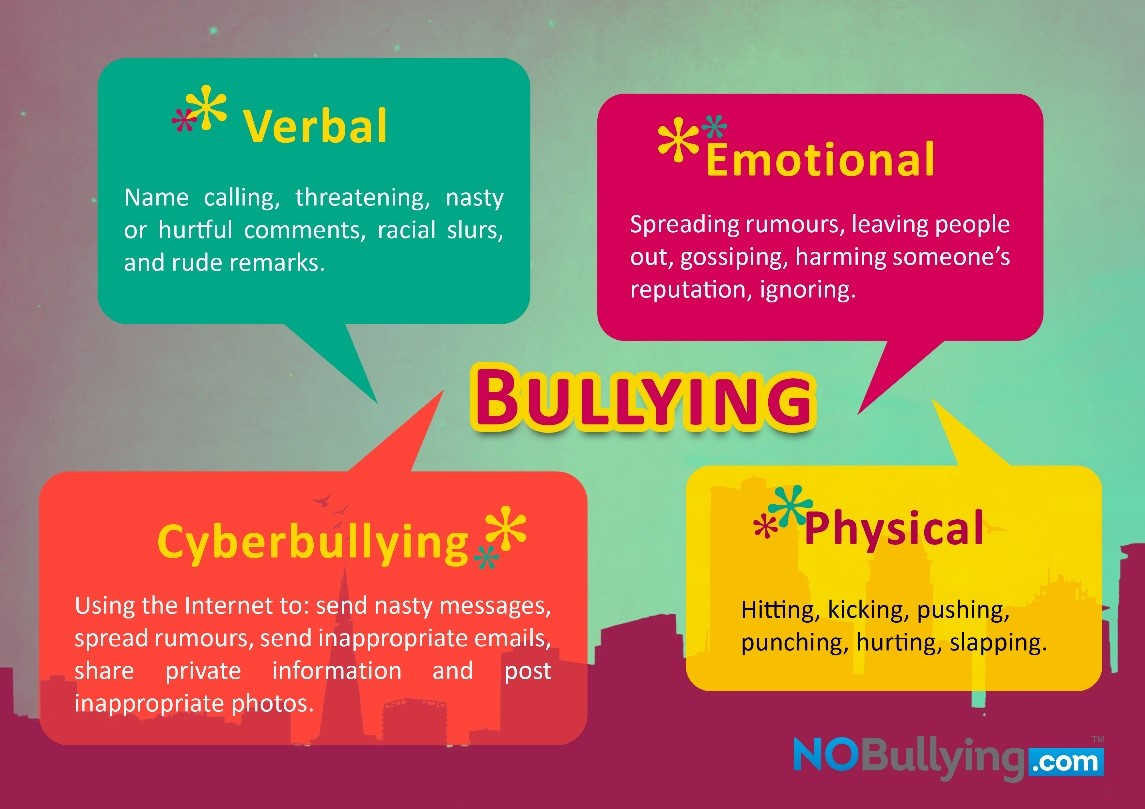
·         Topic: Bullying, and strong consequences for the attacker 
        Specifics: Education on preventing bullying from elementary all the way through high school

·        Starting with parents and educating their children to respect all students, teachers, aides and bus drivers regardless of their race, culture or any other difference they may see.
·        Strong consequences for the intimidator.
·         Making available any information and resources to schools, parents and teachers so they can learn and have the tools on how to deal and manage these situations.
·         Personal experiences, observations, statistics, expert testimonies
·         Arguable sentences: Parents are not aware of do not care if their child is capable of hurting another human being.
·         Teachers who cover up for a student or choose to look the other way to avoid problems.
·         Parents need to be aware if their child is teasing or provoking in any way, another child to be mean or aggressive and address this issue.

·        We need to stop hurting one another and learn and set examples for our young ones on how to deal with our indifference's. 
        
       Elizabeth Victorio
When writing an essay, choosing information is always a difficult decision for me. First I have to take into consideration my audience, then choose a topic.  I learned from "taking a stand" that i need to use reliable facts including statistics, up-dated information and maybe even an expert testimony or an observation that will support my case and persuade the audience.  Not to use terms that are misunderstood and to make sure that it includes  ethos, pathos and logos for a persuasive argument.

Elizabeth Victorio

www.google.com/url

Chapter Nine: Taking a Stand

Personal Reaction: Chapter nine was not really any new information for me, rather a reinforcement/expansion on ideas that I have already been taught. We touched on logical fallacies in English 121, but the chart at the end of the chapter is much more in depth and something that I plan to reference when writing my essay. I really liked how the chapter included an example essay with their own annotations to exemplify how the concepts that they are discussing can be applied to real papers.
                      

Professional Reaction: Chapter nine focuses on how to effectively take a stand, whether it is in your academic writing, or everyday life. There are several components to successfully take a stand, starting with generating ideas. During this process, the writer must begin by finding an issue. The issue must not only interest the writer, but should also take into account the target audience. After the topic is decided, create a vague and debatable question that you wish to answer, then answer it with your thesis. Following the completion of your thesis, use both formal reasoning and informal Toulmin reasoning to refine your position. After you have logically reasoned through your position, the next task is to find evidence that supports your position. As you begin to look for evidence, categorize your claim into one of the three following categories: substantiation, evaluation or endorsing policy. Claims that are substantiation answer the question “what happened?”, claims of evaluation answer “what is right?”, while claims of policy answer “what should be done?”; during this categorization make sure that you consider you target audience. After you have identified the purpose of you claim, it is time to find supporting evidence. Supporting evidence can be either facts, expert testimony, or firsthand observations. The next component to successfully take a stand is planning, drafting and developing. During this process, the writer must assess their working thesis and make sure that the evidence that they gathered still supports its original claim. If it does not, the writer must update their thesis to match the evidence that they gathered. After the thesis is complete, the writer organizes their ideas in a way to persuade their audience. Additionally, writers make sure that uncommon terms are defined, they have utilized ethos, pathos and logos and that all sources are credited. The next component of taking a stand is basic revising and editing. The last component of taking a stand is being able to recognize logical fallacies. Logical fallacies can make readers come to false conclusions or distort evidence which is why they should be avoided at all costs.  

- Clayton Peppler
Photo from: http://tamaralexow.com/2015/07/06/taking-a-stand/