Personal Reaction: Growing up, I’ve alway struggled with creating the perfect thesis. I learned tactic after tactic but would still doubt my final projects accuracy due to the thesis. When I approached this chapter, I was guessing that I would see information that I was sure I already knew. I found that the charts provided and the different kind of thesis will help me in the future with the information provided.
Professional Reaction: In chapter twenty, the process of creating a thesis The discussion on the difference between the explicit and implicit thesis is discussed. I had never heard of these two different thesis’s. The most interesting fact I learned though was the working thesis. The working thesis is when the topic is stated in addition to a slant or altitude. Having a working thesis will result in a central idea and a statement that you can demonstrate your statement successfully. Once your essay is complete, one can use the information stated on page 406 to learn how to successfully revise your thesis. After your thesis has been revised, you are then going to classify your thesis into your sequence. Emphasizing ideas, cluster, rainbow connections, linking, solitaire, and slide show sequences are the main six categories one can classify their thesis into. Then one can classify their thesis by a spatial, logical, or chronological thesis. Once you have categorized your thesis and completed the outline, it’s time to start writing your essay.
Photo from www.slideshare.net
Emily LeMasters
We want to portray what goes on in three very different minds meeting randomly at English Composition 122 at Front Range Community College. By: Clayton Peppler, Emily LeMasters and Elizabeth Victorio
Saturday, March 12, 2016
Chapter Twenty
Personal Reaction: I found chapter twenty to be interesting,
with ideas and concepts that I have been exposed to in the past. Even though I
have been exposed to these ideas and concepts, it is not nearly as in depth as
the book goes. I am someone that struggles with writing clear and concise
theses, so I really enjoyed learning about different tools that could help
improve this critical writing skill. I usually do not write outlines, but I may
use their formal outline for when I write my research essay. I believe that
having an outline for this extensive paper will be very beneficial.
Professional Reaction: Chapter twenty is all about planning
and creating an effective thesis. There are two types of theses, explicit and
implicit. An explicit thesis is exactly what it says, a thesis that is directly
stated while an implicit thesis is one that is indirectly suggested. There is a
formula to create a working thesis: Topic + Slant or Attitude or Point =
Working Thesis. Once you have a working thesis, you must refine it by following
these tips: make sure that the thesis is exact, that is has one central idea,
that it is stated in positive manner and is a limited statement that you can
effectively demonstrate. After you refine your thesis, it is time to improve
it. The chart on page 406 gives you the step by step instructions on how to
effectively revise and edit your working thesis. Once you have refined and
improved your thesis, it is at its final form. With your thesis done, it is
time to sort your ideas into groups. There are three groups that your ideas can
fall into: spatial, chronological or logical. Once the groups are determined,
it you must arrange them in sequences. There are six type of sequences: rainbow
connections, emphasizing ideas, linking, solitaire, slide show and cluster.
Once these two steps are completed, you must formally or informally outline
your ideas. The outline that you will chose will depend on the type of essay that
you are writing.
Clayton Peppler
Photo From: http://blogs.msbcollege.edu/2013/03/15/8-tips-for-constructing-an-amazing-thesis-statement/
Thursday, March 10, 2016
Taking A Stand Essay
What issue or controversy concerns you? What current debate engages you?
An issue that concerns me everyday is the idea that individuals are embarrassed of who they are.
What Position do you want to take? How can you state your stand? What evidence might you need to support it?
I want to take the position that if an individual does not feel resentment towards their own personal being, it would lead to happiness, lower suicide rates, and more honest relationships. Evidence I might need in order to support this hypothesis is statistics.
What other view might you want to recognize?
Some viewpoints I might want to recognize during this stand is circumstances where it may be acceptable for an individual to feel embarrassed.
-Emily LeMasters
An issue that concerns me everyday is the idea that individuals are embarrassed of who they are.
What Position do you want to take? How can you state your stand? What evidence might you need to support it?
I want to take the position that if an individual does not feel resentment towards their own personal being, it would lead to happiness, lower suicide rates, and more honest relationships. Evidence I might need in order to support this hypothesis is statistics.
What other view might you want to recognize?
Some viewpoints I might want to recognize during this stand is circumstances where it may be acceptable for an individual to feel embarrassed.
-Emily LeMasters
Wednesday, March 9, 2016
Chapter Nine: Taking A Stand Review
Personal Review: Although chapter nine presents a large amount of information, I am familiar with a large portion of it. I really enjoyed the example essays throughout the chapter due to the way it helps present information. I feel as though these essays will help me with the completion of my essay regarding taking a stand. Even though I have past knowledge on the topic, this chapter and the essays included will help, in my opinion, in both academic and professional writing.
Professional Review: Taking stand is a procedure that many go through during their life. There are multiple steps regarding taking a stand. First, one starts with finding a topic they want to take a stand with. The topic presented is not only going to intrigue the writer, but the reader as well. After this step is completed, the writer will present a question regarding the topic one wants to answer, looking at both points of view. While doing this one is to find information that will help support their thesis. While you're creating your essay, you'll categorize the claim within endorsing, evaluation, and substantiation. Once you find the claim, you find evidence that supports the claim. From here, one will draft a paper to support their claim. Once this is complete, one will complete their argument. All in all, this chapter helps one identify if one's argument is a logical fallacy or not.
-Emily LeMasters
Sunday, March 6, 2016
Taking a Stand Essay
What issue or controversy concerns you? What current debate
engages you?
·
Should children be receiving participation
awards?
What position do you want to take? How can you state your
stand? What evidence might you need to support it?
·
I am against children receiving participation
awards for the following reasons:
- Parents overvalue their children (creates
an issue with entitlement and superiority)
- Hurts the child’s ability to learn that
success comes through hard work and persevering through the loss.
- Sets the wrong example (a child with a bad
attitude gets a trophy).
- Weakens competition (not the real world).
- Trophies lose value (more trophies equals
less value).
- Misallocated funds (funds spent on
participation awards => scholarships).
What other views might you want to recognize?
·
I will want to address why people who believe in
participation awards are wrong.
- Clayton Peppler
Photo From: https://leagueathletics.com/Page.asp?n=72065&org=auburndalesoccerclub.org
Saturday, March 5, 2016
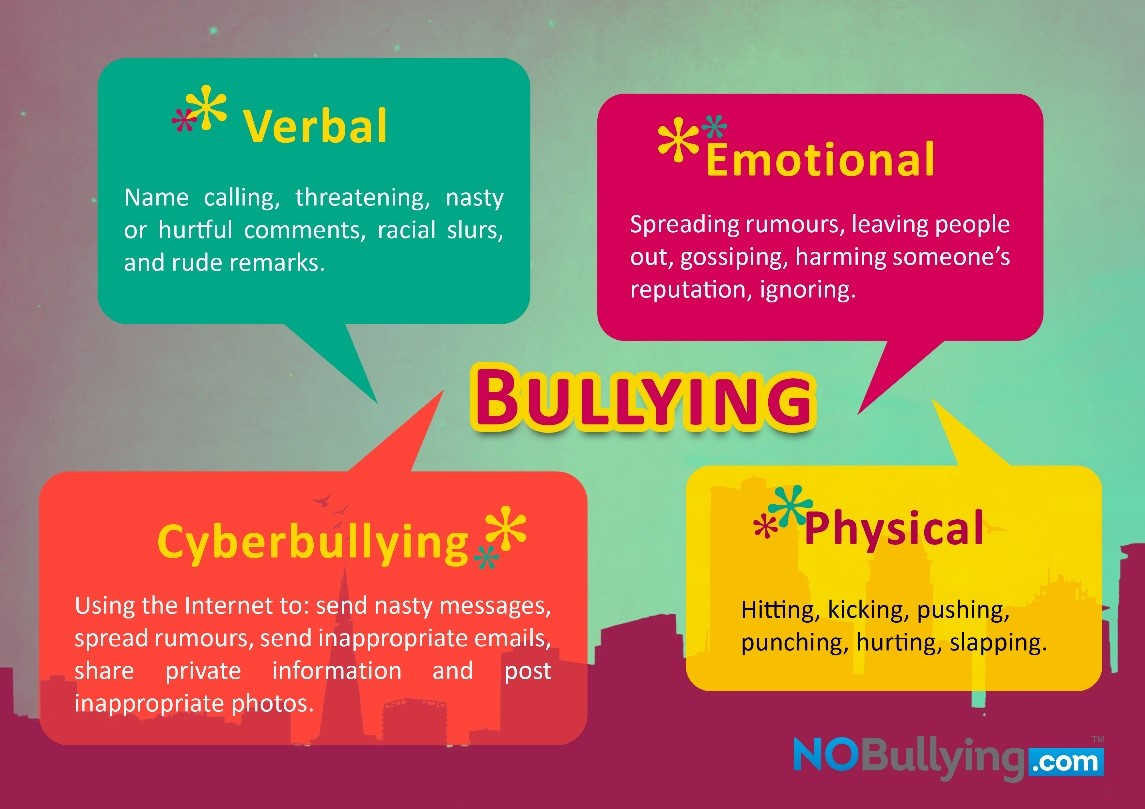
Discovery Checklist
·
Topic: Bullying, and strong consequences for the
attacker
Specifics: Education on preventing bullying from
elementary all the way through high school
· Starting with parents and educating their
children to respect all students, teachers, aides and bus drivers regardless of
their race, culture or any other difference they may see.
· Strong consequences for the intimidator.
·
Making available any information and resources
to schools, parents and teachers so they can learn and have the tools on how to
deal and manage these situations.
·
Personal experiences, observations, statistics,
expert testimonies
·
Arguable
sentences: Parents are not aware of do not care if their child is capable of
hurting another human being.
·
Teachers who cover up for a student or choose to
look the other way to avoid problems.
·
Parents need to be aware if their child is
teasing or provoking in any way, another child to be mean or aggressive and
address this issue.
· We need to stop hurting one another and learn
and set examples for our young ones on how to deal with our indifference's.
Elizabeth Victorio
When writing an essay, choosing information is always a difficult decision for me. First I have to take into consideration my audience, then choose a topic. I learned from "taking a stand" that i need to use reliable facts including statistics, up-dated information and maybe even an expert testimony or an observation that will support my case and persuade the audience. Not to use terms that are misunderstood and to make sure that it includes ethos, pathos and logos for a persuasive argument.
Elizabeth Victorio
www.google.com/url
Elizabeth Victorio
www.google.com/url
Subscribe to:
Posts (Atom)