Showing posts with label EUGENIA LEHMAN. Show all posts

Wednesday, November 11, 2015

CHAPTER 17
Integrating sources & avoiding plagiarism.

Image result for plagiarism

Image Source: http://qualitycustomessays.com


Personal opinion:

I liked how the author presented the information in this chapter. The introduction paragraph gives good tips on notes taking and the next steps to follow to successfully integrate and synthesize
the material found in your own writing.
The parts about paraphrasing, summarizing, quoting, integrating material, synthesizing and avoiding plagiarism have very clear examples that helped me to understand the methodology and tips of the author.

Professional opinion:
Chapter 17 exposes the student to the ways and methods to succesfully integrate sources in a argument essay and how to avoid plagiarism.
After a brief but complete introduction the author goes into detail about each method. The chapter is presented and organised in different sections clearly identified by a title. In each section there is a clear example to help comprehension.


ETHOS, PATHOS, LOGOS


Ethos: 
It is the ethical appeal. 
It is the part of the argument that appeals to the credibility or knowledge of the author on a specific subject 
1. I will use reliable sources to talk about the influence of media on young girls and women.
2. I will cite psychologist and scholars who have studied the impacts that the media has on the psyche of the viewers.
3. I will talk about my personal reaction  as a woman and as a  mother with the images and messages I receive from the ads and the media. I will present my views in a fair way not to compromise my credibility.

Pathos:
It is the emotional appeal. It is trying to establish an emotional connection with the reader.
1. I will use examples that are easily recognizable by the reader. The readers is also exposed to advertisement and observes the media, so by choosing the right case studies or examples I will gain the sympathy of the reader. 

Logos: 
It is the part of the argument that appeals to the logic and reasoning.
1. I will be thoughtful about how to structure my argument so my reasoning and logic appears easily to the reader.
2. I will use the evidence from medical and psychological studies, to support my arguments.

3. I will get my evidence in reputable medical databases. 

Tuesday, November 3, 2015

CHAPTER 16


Image result for RELIABLE SOURCES
Image Source: http://www.cnn.com/shows/reliable-sources


Personal Reaction:
I found this chapter very educationnal. It teaches the best sources for accurate  and reliable information. Internet has become the first source of information for so many people but this chapter teaches us that it may not be the best one. I will use a lot what I have discovered in this chapter during my studies but also in my everyday life.

Professional Reaction:
This chapter explains in a very organized and complete manner the problems with sources and teaches the students were and how to find the most accurate information for research papers.
The sections about the different sources are easy to read and the organization of the information is simple yet complete.

Monday, October 19, 2015

Grammar Video

By: Lucas Calderon, Clayton Peppler, Summer Eisert-Wiemelt, Eugenia Lehman, & Kristen Skuba

About: Double Negatives, Personification, Adverbs, Pronouns, & Hyperboles


Tuesday, October 6, 2015

BLOG REVIEW #2


Image Source: roguedenver.com

The blog I have decided to follow is https://thefirst2rows.wordpress.com/


Constructive criticism.
The first thing that I like about this post was the picture chosen for the top of the page. I find it suited to our class, also the humorist note that explain their title gives a fun edge  to the page.
The lack of color for the background allows for the text to pop to the eyes of the reader, and the pictures selected, makes the overall blog a very pleasant visual experience

Blog Quality Criteria
I think the blog meets some of the qualities listed on the criteria list, but unfortunately misses some others. The first thing I noticed missing is the blog description. The reader will not understand what is the purpose or central theme for this blog. That is a shame because the very appealing picture, the title and humorist touch in the sentence "the greatest rows of all time" will fall flat for the reader who doesn't know that the writers are students in an English class. The quality of the writing could also be improved. It is to expect that different bloggers have different styles, but after reading the entire blog, I felt a lack of cohesiveness. A way to correct this could be group joined editing sessions, after the blog entries are posted.

Overall the pleasant and easy to look at visuals and organisation as well as the variety of the content makes this blog my favorite.


Chapter 14. Argumentation.

Image result for argumentative
Image Source: teach123.com


Professional opinion:
This chapter was very informative and the structure of the information given was well organised and clearly presented to the reader.
The steps given to plan and argumentative essay, particularly the paragraphs about collecting evidence  for an argument and also the paragraphs about the difference between deductive and inductive arguments were, the most useful parts of the chapter. It teaches the students with specific examples the correct way to lead the reader of the essay through a well structured logic. This chapter also explains in a very complete way how to avoid fallacies and other mistakes.


Personal Opinion:
I find this chapter very interesting to read. The clear way it explains how to construct an argument will be so useful to improve my essay writing skills.
Even if the chapter was long, the information was so clearly explained that I found it an easy read. I particularly liked the paragraphs about the Roguerian Argument, because it will help me to convince my reader in a less confrontational way
I will definitely use this helpful information  in my next argumentative essay.

Tuesday, September 22, 2015

Summer's partnered outline.
By Eugenia Lehman
 Image result for homeschooling
Image Source: http://www.rgvhc.com/

Exemplification Thesis:
Each year more parents are choosing to home-school their children rather than traditional public school in the hopes their children benefit from an individualized education program.

Ideas, points to develop:
-Homeschooling is an option for parents who might not identify with the academic culture of the place they live in.

-The levels of education have being damaged these last years by policies like "No child left behind".  Home school can be seen as an option to educate your kids to their full capacities.

-We live in a time of deep social changes with issues such as gay and transgender rights. Some parents decide to home school based on religious beliefs.

-Social media has given new options for socializing and meeting with other home schooled kids. Isolation is not a factor to consider anymore.

-Search engines and all the tools that you find online make it very accessible for parents to create a high customized plan for their kids.


Thursday, September 17, 2015

Logical Fallacy #1

Jumping to a Conclusion:

Jumping to a conclusion is when someone comes up with a generalization and states it factually without adequate evidence to do so.

How to avoid it: 

Make sure you have all the information you need. Don't make assumptions without having credible facts to back them up.

-Summer Eisert-Wiemelt, Eugenia Lehman, Lucas Calderon, Clayton Peppler, Kristen Skuba

photo: thefreelancereport.com


Wednesday, September 16, 2015

Eugenia Lehman
Exemplification Essays


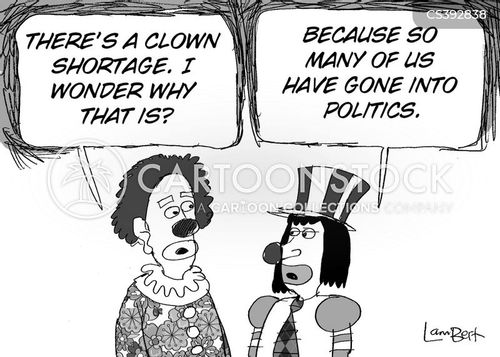
Image Source: https://www.cartoonstock.com/newscartoons/directory/c/circus.asp

Thesis : Political campaigns are more about the mediatic circus than about the essence of the candidates or the solutions offered to the country's problems

Tuesday, September 15, 2015

Just Walk On By Comprehension Questions

By:
Clayton Peppler, Lucas Calderon, Eugenia Lehman, Summer Eisert-Wiemelt, and Kristen Skuba

Comprehension

1. The woman in the introduction paragraph is labeled as a victim because the people he is talking about commonly victimize themselves once they see him. We think he did it because it is a good hook.
2. By "alter public space" he means his race has the ability to create instant tension and fear in those around him. 
3. Staples walks the street at night because he has insomnia and can't sleep.
4. The young powerless men are more likely to become thugs because it makes them feel powerful and like they are real men, instead of the children that Staples describes them as. 
5. Staples attempts, and succeeds, at making himself seem less threatening by giving people space and whistling a tune to seem at ease. 

Purpose and Audience

1. The thesis is "It was in the echo of that terrified woman's footfalls that I first began to know the unwieldy inheritance I'd come into- the ability to alter public space in ugly ways." He implies his thesis instead of directly stating it is because of his race. 
2. Staples uses logic and emotion during this essay, we think it is appropriate.
3. Staples assumes his audience has a similar pre-conception as the "victim" in his intro paragraph. He challenges it by giving multiple examples of not only how he doesn't belong to this stereotype, but how he also goes out of his way to make sure people are comfortable with his presence. 
4. He is trying to get the reader interested, and we think he succeeds. Hook, line, and sinker.

Style and Structure

1. Staples mentions Norman Podhoretz because he wrote an essay called "My Negro Problem- and Ours". He brings it up to show the lengths that people will go to in order to prove the fact that black men are "dangerous". He could make the same point without referencing the essay, but it wouldn't be as strong.
2. An anecdote is an effective way to start an exemplification essay. We think this is a proper strategy for this style of essay and that he did a good job with it.
3. Staples presents plenty of examples to support his thesis, they are very representative of his point. He could not have given much more convincing examples.
4. The examples are presented in what seems to be chronological order. We think this is an effective order because it makes it more personal, like a life story.
5.Thug:
  -Gangster
  -Hoodlum
  -Delinquent
  -Gang Member
  -Punk
  -Goon
  -Ruffian
All these words have a negative connotation and brings to mind images of bad people.

Journal Entry

Lucas: "I have been in similar, but not exact situations."
Clayton: "I have not been perceived as a threat."
Eugenia: "I haven't had that situation happen to me. However, I have felt very threatened before."
Summer: "I have felt threatened in public before."
Kristen: "I have felt a little threatened in public before, but I haven't felt like too much of a threat."

Writing Workshop

3. Staples observation is very accurate as far as people's desire to be important and powerful. He means that people are willing to be immoral in order to feel powerful or intimidating.

Combining the Patterns

Several examples wouldn't have necessarily impacted it in a negative or positive way.

photo: ourtrivialtales.com


Monday, September 7, 2015


Image source: http://www.fibonacci.it/bellezza-aurea.html

Thesis: Is technical knowledge at odds with artistic expression or is it at the base of it?

Introduction: When we think about artistic creation, we tend to assimilate it with the explosion of raw creativity of the artist that swings between the highs and lows of his deep emotional spectrum. Throughout history the concept of an artist is generally represented by characters like Michelangelo, Paul Gauguin, Edward Munch, or Vincent Van Gogh; misunderstood geniuses, victims of their own creative internal chaos. That ability the artist has to connect with his most inner emotions allows him to render his feelings and thoughts using color and shapes. What is it that makes these pieces art? Why do the creations of the masters impact us in a bigger way that the simple decorative drawing on a piece of paper, which was also created by the combination of lines, shapes and colors? One answer to this question could be found in the Oxford dictionary’s definition of art:
“Art: The expression or application of human creative skill and imagination, typically in a visual form such as painting or sculpture, producing works to be appreciated primarily for their beauty or emotional power”.
This definition brings the concepts of skill and beauty, and it is around these two concepts that the view of what art is starts gaining more layers. How does and artist reaches the skill that will allow him to create? Talent is born but it also formed, and enhanced by the knowledge of the techniques of drawing, painting, achieved to perfection by all the great masters. When we think about a painted flower on a canvas as a combination of geometrical forms that must keep the same ratios, proportions and angles as the model, then art starts sounding more technological, more mathematical. The same goes for beauty, which is one of the goals of art. Is beauty also attained by the technological knowledge of ratios, patterns and harmony? Could the concept of technology actually be at the origin of artistic creation instead of being considered at odds with the artistic process and expression?

  • What is beauty, patterns, harmony.
  • Maths and beauty
  • Michelangelo, the Golden ratio and the Fibonnacci numbers
  • Classic art and the big masters


Counter Thesis:
  • Technique vs emotions
  • Creation vs imitation
  • Technique is means to and end
  • Modern art


Conclusion.

Thursday, September 3, 2015

LifeHacker Review


   Out of 10, we gave this blog a 3. We did not like this blog because we found it overall hard to navigate and its lack of organization within the posts makes it hard to find topics of your interest. We feel like the idea of this blog was great, however the execution took away from the quality of the idea. Maybe if they had taken more time to improve the ease-of-use of this blog, we would've found it more intriguing.
  The lack of a navigational bar is the first thing you notice when you open the blog. Followed by the lack of any apparent cohesion at all. Blog posts seem to be of various sizes and about random topics without relation other than the 'hacking' they explain. According to google's definition, the meaning of a blog is part that it is supposed to be written in an informal, conversational, style, but the complete overlook of organization in this blog makes it more inconvenient to use than it is helpful.
   We found the idea of the blog to be great, and have all found life-hacks to be useful in the past. However, we were very disappointed with the way this blog turned out. We were unable to find any posts that related to our interests, and therefore left the blog before learning any hacks. If the makers of this blog had paid more attention to organization and the way that the audience has to move about the blog, then this would be much more informative and overall better.

-Summer E.W., Eugenia L., Lucas C., Clayton P., Kristen S.

Tuesday, September 1, 2015

Mini Essay Backwards Outline


Intro:
Talk about personal experience, and how he fails to follow the trend of how 'powerful' people communicate.
Thesis:
"But even the most garbled and indecipherable of them are saying something, and what they have to say is, in terms of social status, a bummer."
Support Point:
They do it on purpose to show power and to claim status.
Support Point:
Times have changes, people used to pride themselves on good education whereas now it's not as valued.
Support Point:
How it can come back to negatively affect you and your business/company.
Counter Argument:
People think it's hip and cool to appear this way, they want to seem powerful.
Conclusion:
"Which only confirms what I've always felt about power: that the people who really understand it don't say anything at all."

- Eugenia, Summer, Clayton, Lucas, Kristen
photo: buycheapchannelessay.com


Monday, August 31, 2015

CHAPTER THREE: Arrangement.
Eugenia Lehman


Image Source:http://www.lariverkayaksafari.org/thesis-paper-writers/

Personal reaction:
Even if I didn't find chapter three to be a very captivating reading, it was full of useful information to help me understand where I need to improve my so I can write better essay.
It covered all the key elements for a properly structured essay and also writing tips for each it's different parts.
It thought it was a very clear and easy to follow path to write a good essay. The various example paragraphs also helped me to understand all the concepts.

Professional reaction:
The efficiency with which  the chapter covers all the aspects of essay writing , gives the students the
tools necessary to improver their essay writing.
Chapter 3 takes the reader from the identification of the type of essay, to the introduction, body and conclusion. Every part is explained in a clear and simple way, and the use of examples help the students to see everything more clear.
The chapter also gives tips for the structure of the introduction, body and conclusion as well as an explanation of how to transition and how to support the theories exposed in the essay.
This chapter is a very helpful read for all those who wish to polish their writing technique

Thursday, August 27, 2015

Interview With...

writers-block
Image source:                                                        http://daddyelk.com/best-of-times-worst-of-times/
ENG 121
WRITER'S BLOCK.
Interview with Amin Shrestha
By Eugenia Lehman

English Composition can be a feared subject by many who decide to enter college. Previous experiences during the high school years, and the well-known writers block we have all had in the past, when we sat pencil in hand and blank faced not knowing how to start an assignment, has predisposed many of us students, and has made us doubt about our abilities. Maybe this stereotypical negative idea of what English Composition is, gets in our way to embrace our natural born qualities as communicators. Human beings were not born to be in isolation without communicating with one another. We talk, tell stories, sing songs in such a natural way that I wonder if given the proper tools during this semester, could we feel more confident and more at ease when we have to lay down all what we have to say in a blank piece of paper. We all know how to write down isolated ideas. What will become of our writers destinies when will have the tools to connect them fluidly and be able to compose a great essay?
I had the opportunity to sit with Amin Shrestha, a student in the English Composition Class at Front Range Community College for the fall semester 2015, and learn more about him and his writing experience, and proficiency in English Composition.
Amin is studying International Business. He has finished several classes but he has been holding on English Composition 101 because he doesn’t like writing. He does enjoy reading books and favors Greek Mythology. He doesn’t consider himself a poet but he appreciates rap music. We must ask ourselves, what is RAP but a form of modern poetry telling the stories and conflicts of our society? Does Amin actually like poetry without knowing it? He does seem to have the appreciation of it.
This is the first attempt for Amin at English Composition 121. When we talked about his previous experiences in writing during his high school education, Amin told me about the typical struggles with how to start the paper, difficulty with inspiration and then with structure. He is also aware that mastering this class will help him in the nearby future, first for rest of his college education but also in the professional world. 
Amin has the advantage of his age, he belongs to the generation of iPhone and Facebook pages. He is more than proficient with computers, writing software and browsing the internet. He feels at ease with social media and networking. Nowadays writers have to be able to navigate blogging sites and twitter posts and accounts. He feels so natural in the permanent accessible encyclopedia of the wide web than, even if he is on his 3rd semester, he has never been to the library.
We ended our conversation talking about the goals he wants to achieve and the obstacles he foresees for this class. Amin wants of course to pass the class, and he is aware of his problems with punctuation, and wants to work on those.
When I asked him how this class could help him in the future in a concrete way, he mentioned that it will be very helpful for writing resumes cover letter in a concise and professional manner.
It was a great insight to talk with Amin and I can’t wait to see what he will be able to accomplish this semester.


E.L

Let Steroids into the Hall of Fame


deviantart.com/killacap25

1. What is the writer's general subject?
Steroid use by baseball hall of fame stars.
2. What is the writer's main point?
To allow steroid use into major league baseball.
3. What are the writer's key supporting points?
If everybody used drugs, it would be an even playing field.
4. Does the writer seem to have a particular purpose in mind?
To convince people to allow steroid use into major league sports.
5. What kind of audience is the writer addressing?
The author seems to be addressing baseball fans.
6. What are the writer's assumptions about audience? About subject?
He is assuming that his audience cares about sports. He is assuming that steroids only enhance the game.
7. Are the writer's ideas consistent with your own?
None of us agreed with what the writer was saying.
8. Does the writer reveal any biases?
He is biased in that he thinks steroids are beneficial to the game.
9. Do you have any knowledge that challenges the writer's ideas?
Steroids are commonly talked about with a negative connotation because they are widely known to have bad side-effects on the body.
10. Is any information missing?
The author is missing a counterargument. Making the piece feel very one-sided.
11. Are any sequential or logical links missing?
The author brings up children and the control of their usage of steroids, it is a random thought that has no substance outside of that statement.
12. Can you identify themes or ideas that also appear in other works you have read?
When an author writes about a topic that they don't have a solid counter-argument for, they are more likely to avoid the proper ways of writing, like counterarguments and debunking them.
13. Can you identify parallel's with your own experience?
None of us have had any experiences with steroids of our own accord.